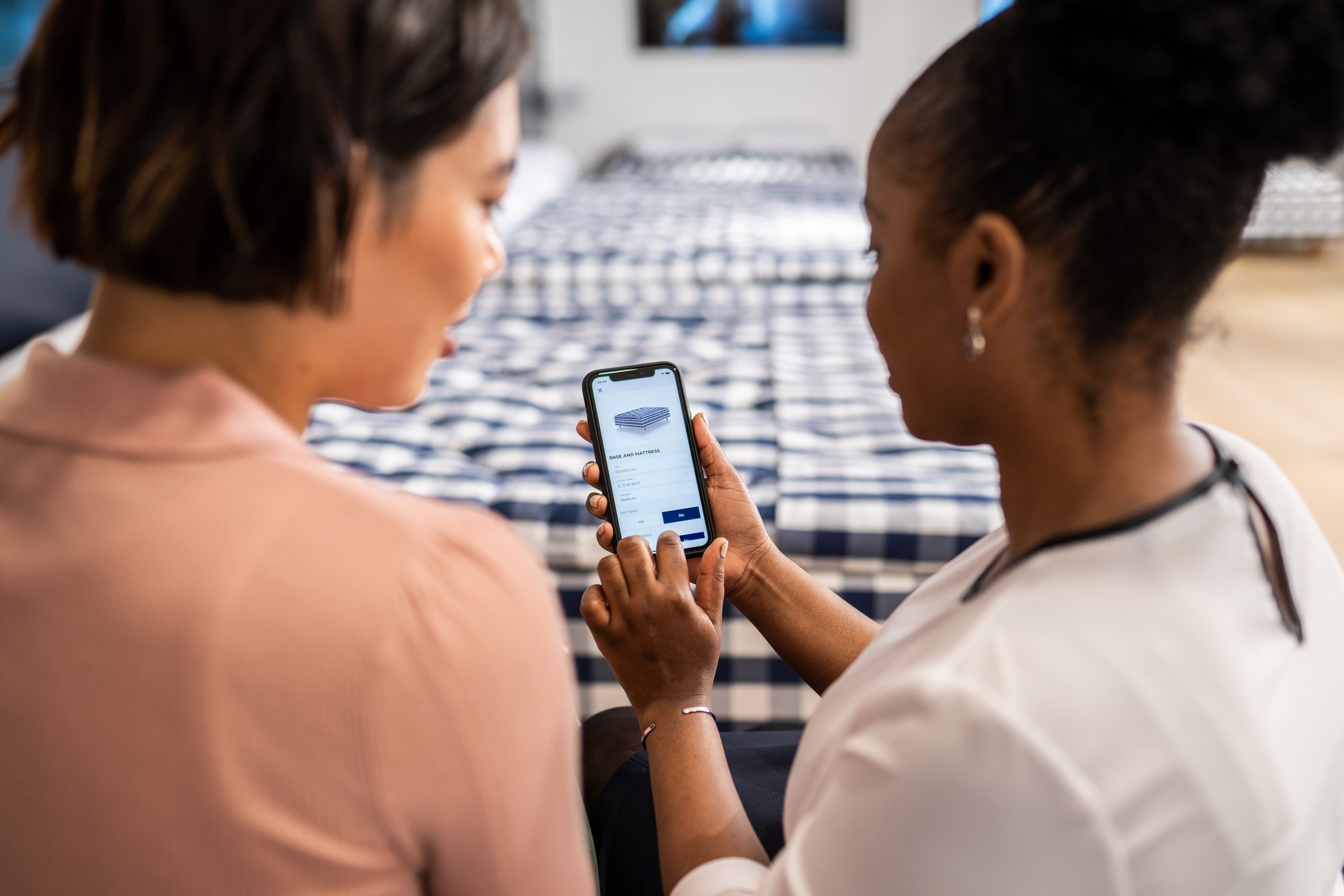
Hästens
Designing a digital sales tool to elevate the in-store experience
Background
This project came to us from Deloitte’s Salesforce team, who, when doing quick fixes on Hästens’ SalesCloud implementation had realized something bigger was at play that couldn’t be solved with a quick fix. This realization began a several years long partnership with Hästens, starting with setting their vision and then bit by bit realizing it: with the first stop being a custom sales app for their store staff.
Our task
Improving the way Hästens’ store staff configure beds and create quotes for the customers in store.
The client
Founded in 1852, Hästens is a Swedish manufacturer of high-end, handcrafted beds
my role
I was the UX/UI designer along with another UX designer, a Service Designer, an iOS developer, and two SalesForce developers
DELIVERABLES
Customer journeys
Design sprint
UX design
Visual design
App design
Getting to the root of the problem
Our user researcher started by conducting interviews with Hästens’ store staff, mapping processes and pain points, and I joined when it was time for synthesizing these insights.
We learned that most Hästens beds are created to order. These are high-end, luxury beds, which the customer can customize exactly to their liking. That also means that when it comes to the checkout, it’s not as easy as clicking “add to cart”. These beds need to be configured and a sales order sent to Hästens’ factory in Köping – and the current systems to do so were old, slow and far from user friendly. This jeopardized the key moment when sales staff were trying to make a sale.
problem 1
Configuring a bed could take up to 20 min in the current system.
problem 2
It was possible to configure a bed that couldn’t be manufactured.
Turning pain points into opportunities
Starting from the problem areas we’d found, we ideated on solutions for a future version of Hästens. This was visualized as an illustrated future-state customer journey, by myself and the UX-designer on the project, both in poster format for the Hästens’ office, and a microsite created in Readymag. This greatly facilitated our conversations with Hästens’ CEO and other stakeholders and was iterated upon to include the capabilities needed to turn it into reality. In the end, our customer journey became the foundation for Hästens future product roadmap.
The first product to come out of it? A point-of-sale app for the sales associates in store.
Part of the microsite version of the customer journey
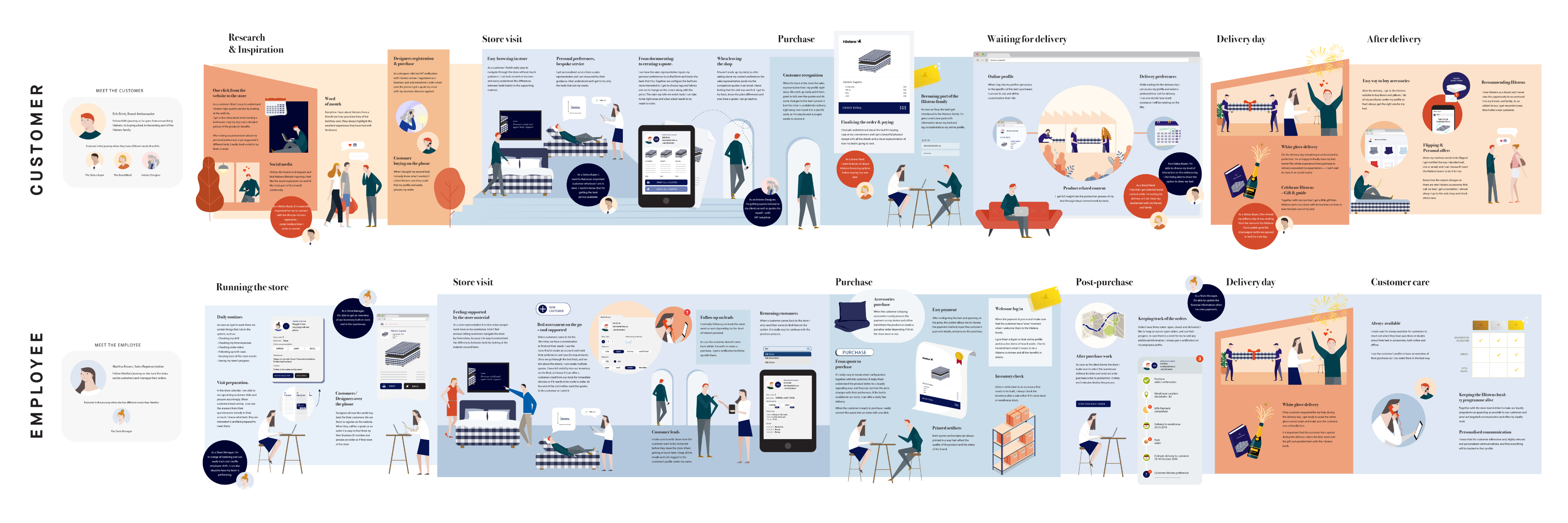
The full future-state customer journey, showing both sides of the experience: the customer and employee.
Kickstarting the product build with a design sprint at Apple
Making use of Deloitte’s partnership with Apple, we applied to be part of their Enterprise Design Lab. This is Apple’s version of a one-week design sprint, specifically targeted to enterprise solutions.
Not long after, we set off to Cupertino, CA, together with the Hästens team. There, we co-created the first version of the app with sales associates from Hästens’ US stores. In just five days, we interviewed the sales associates, drew up whiteboard wireframes, iterated with the users, designed a hi-res mockup using Apple’s UI kit, iterated some more, and our iOS dev Frida built the first coded prototype of the app.
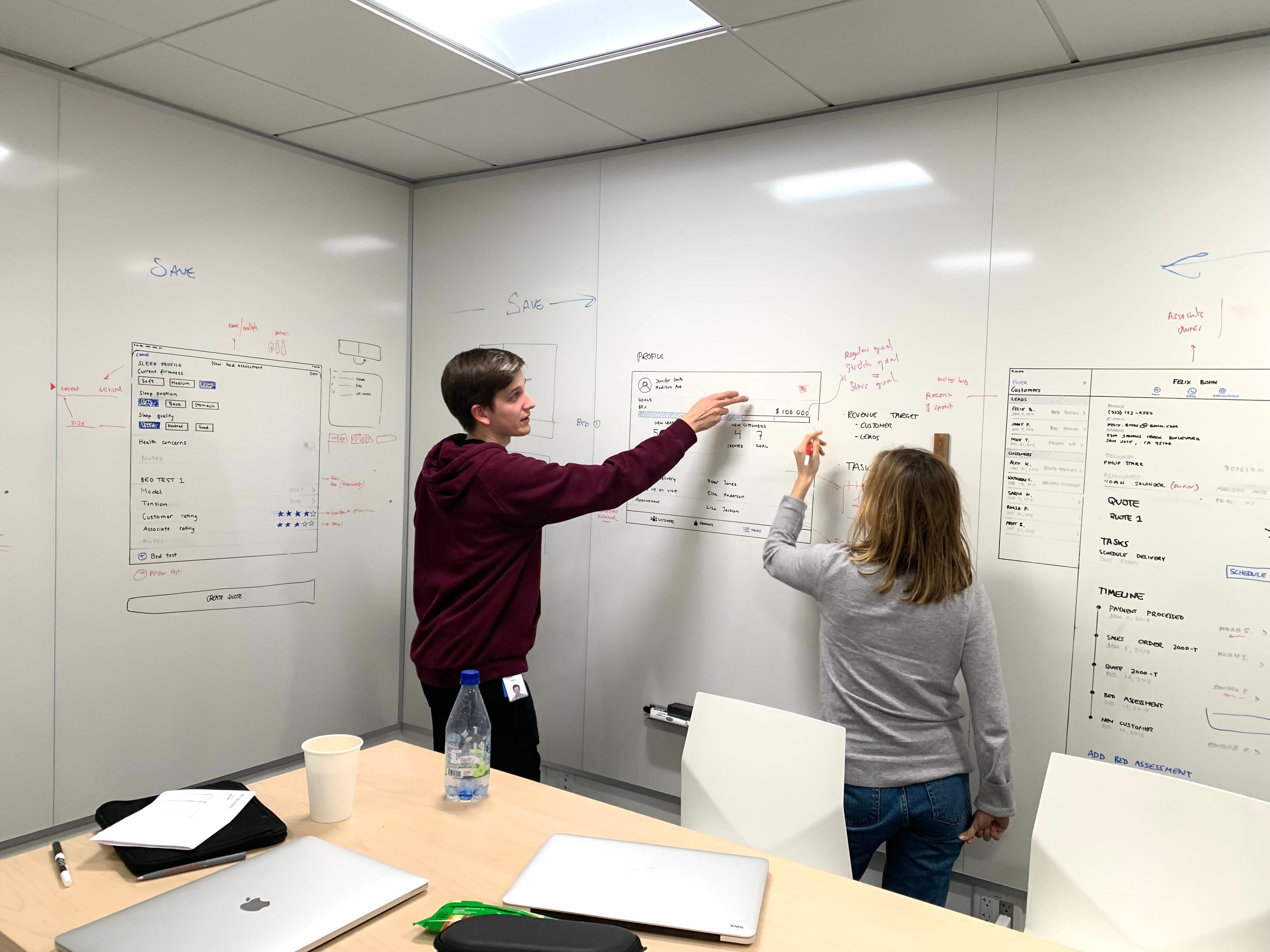
In the room of whiteboard walls at Apple’s offices in Cupertino: our UX:er Sara, and Felix, the designer from Apple, wireframing.
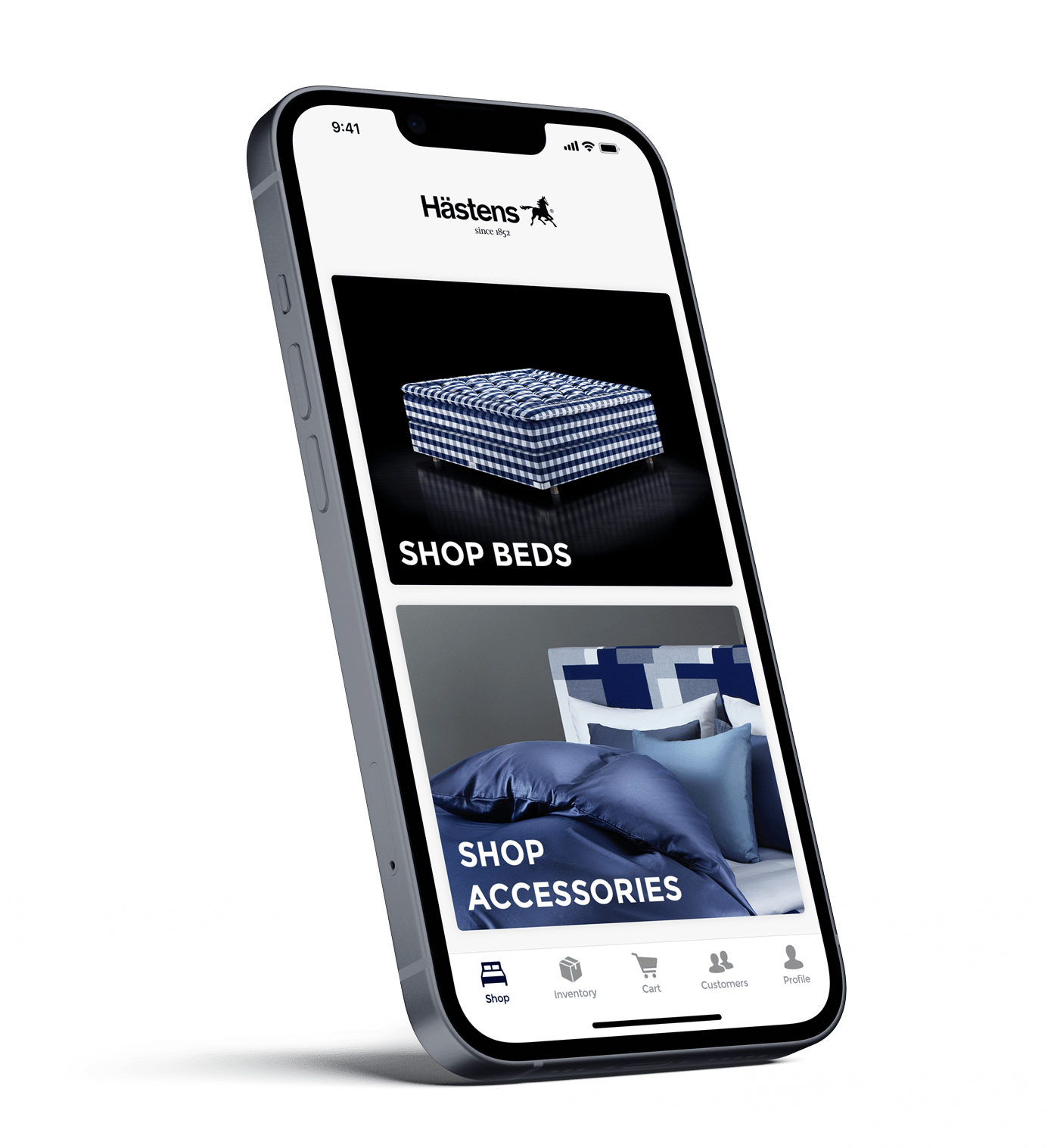
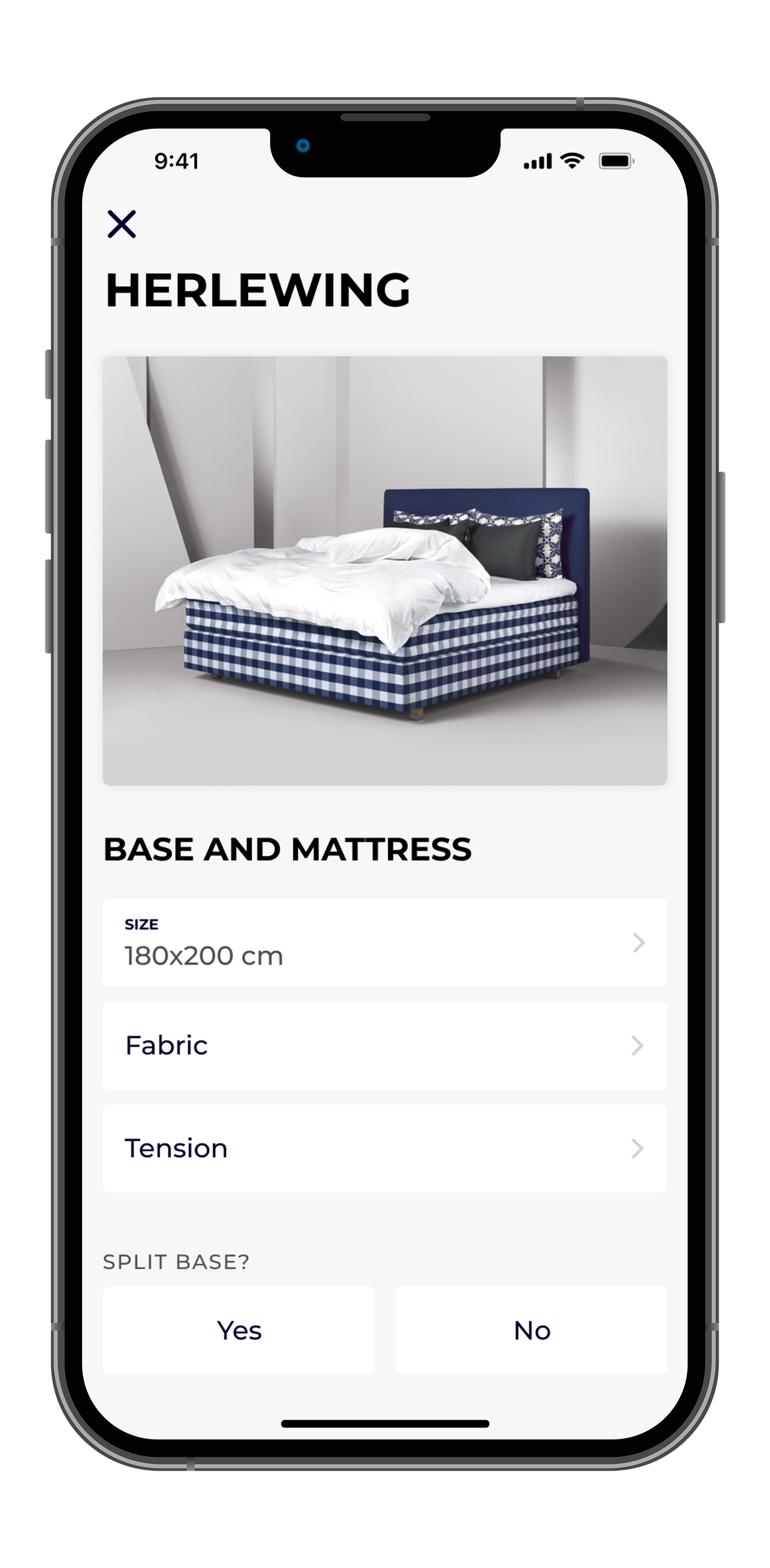
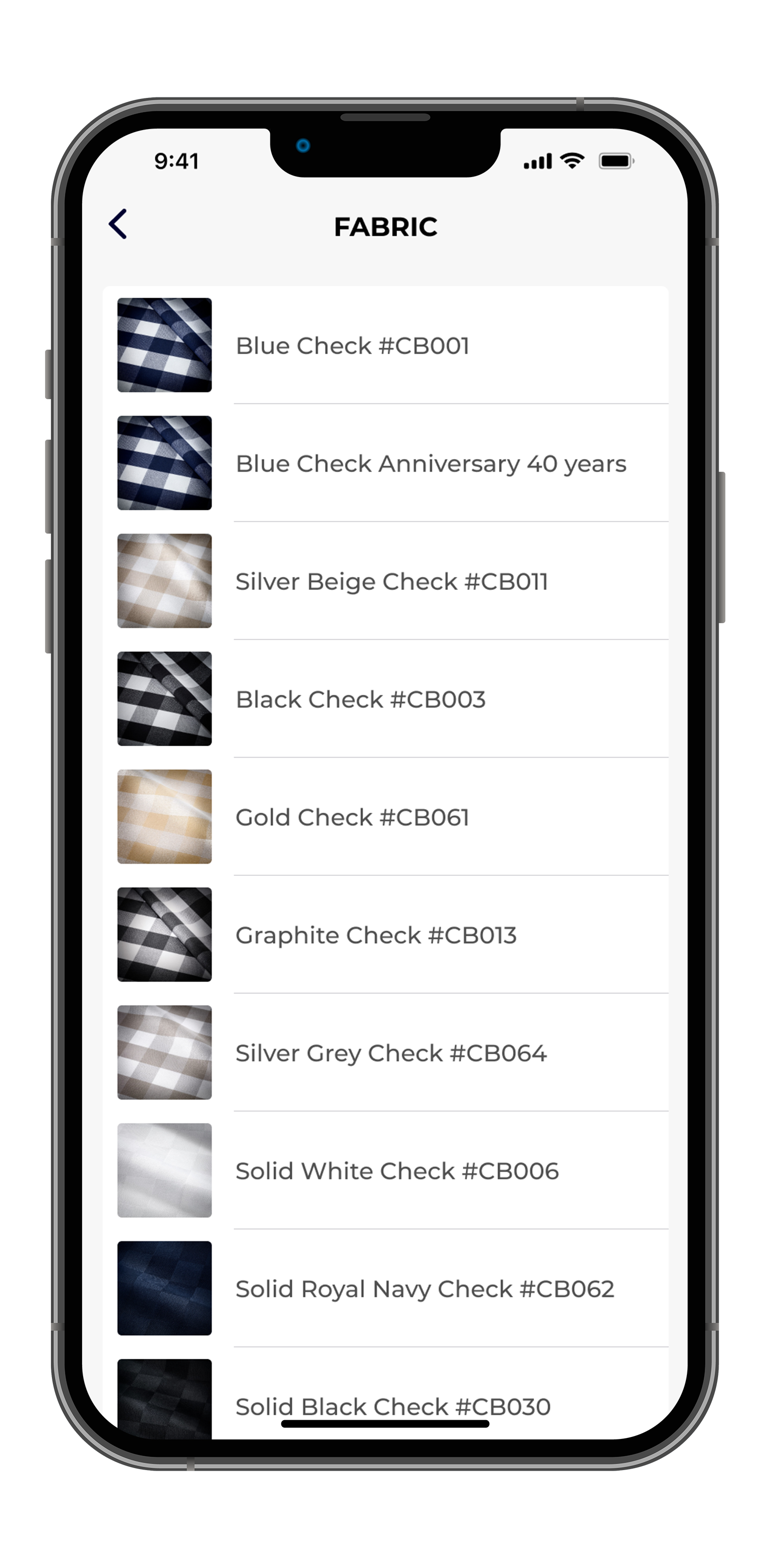
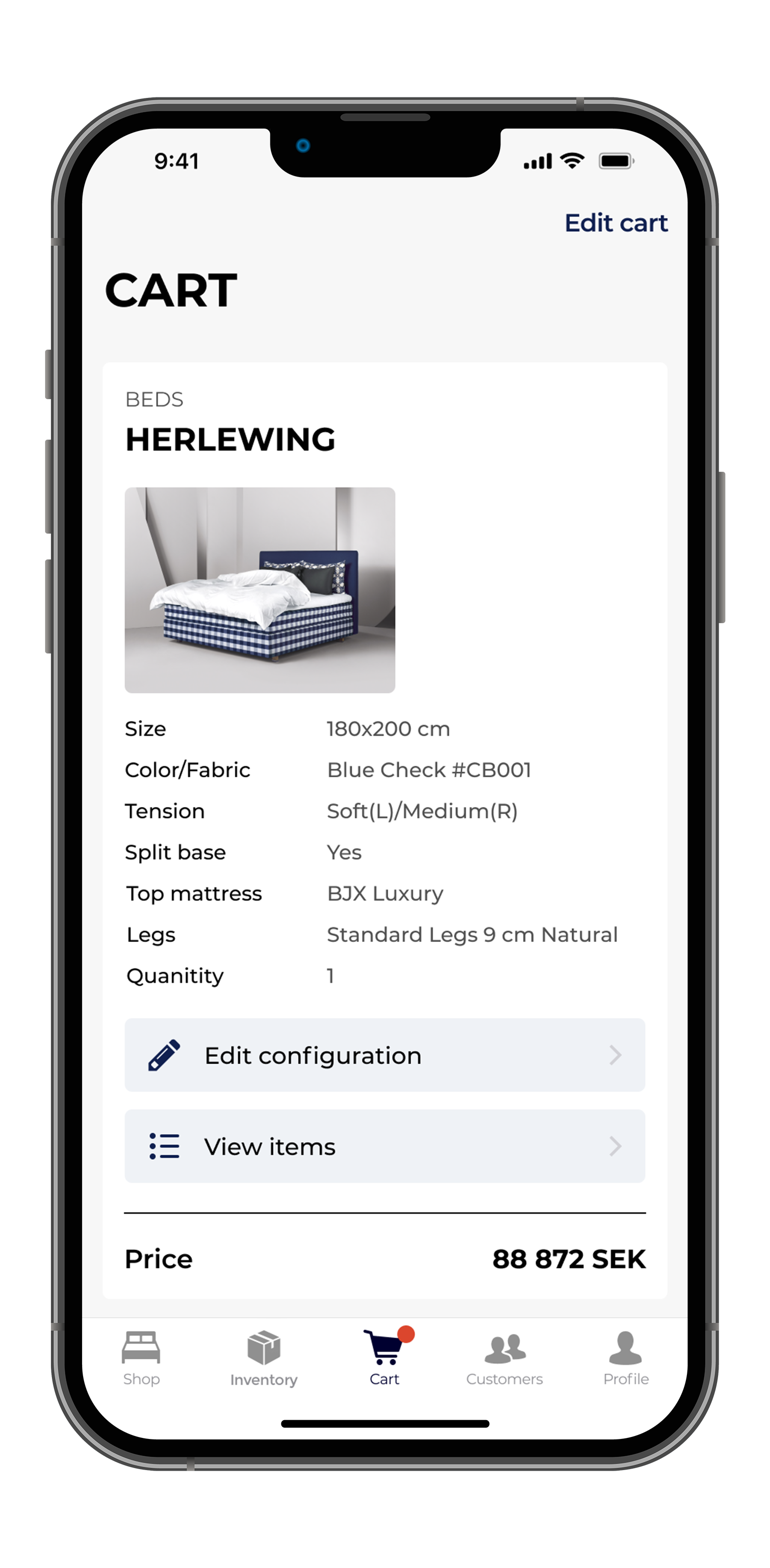
Back in Sweden, I polished that first iteration into an MVP to be used in stores. I worked side-by-side with our iOS dev on the build, and regularly tested my designs by going by the Hästens store on Birger Jarlsgatan and showing the prototypes to the sales associates – my future users.
Building out features
After the first version of the app was released to Hästens staff, we continued to work on additional features requested by the sales associates.
This app wasn’t just to buy beds, like a normal e-commerce app – it was meant to do all the back office tasks around selling in store. That included a long list of complicated flows, such as: visibility of inventory, packing items (i.e. reserving inventory), returning items, adding discounts, creating a sales order to the factory, multiple payment options...
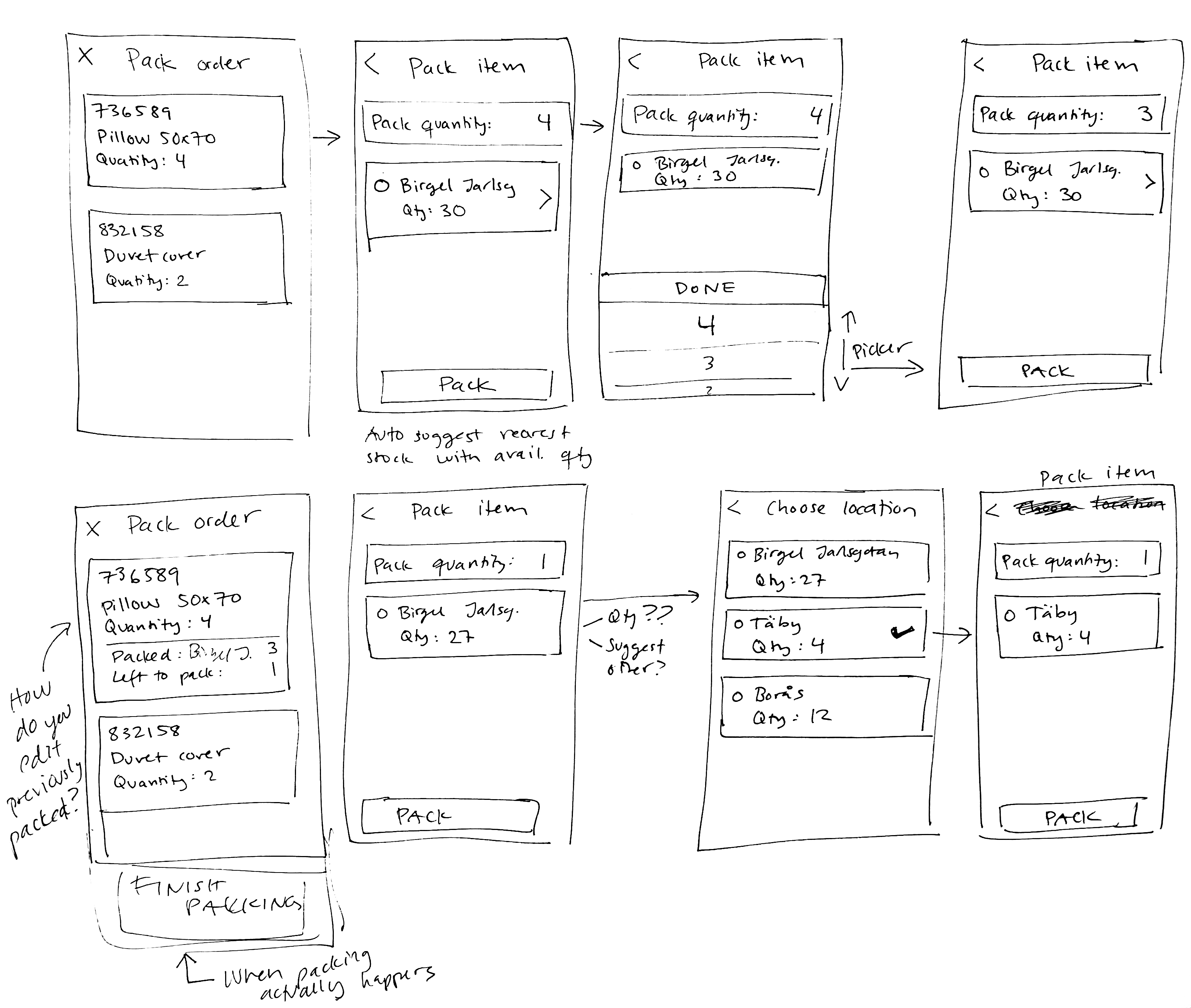
One of the key features was stock visibility. Outside of Sweden especially, selling from stock was more common, being far away from the Köping factory. Visibility of inventory, both in store and warehouses, was crucial for sales associates to sell to customers who didn’t want to wait months for production and shipping.
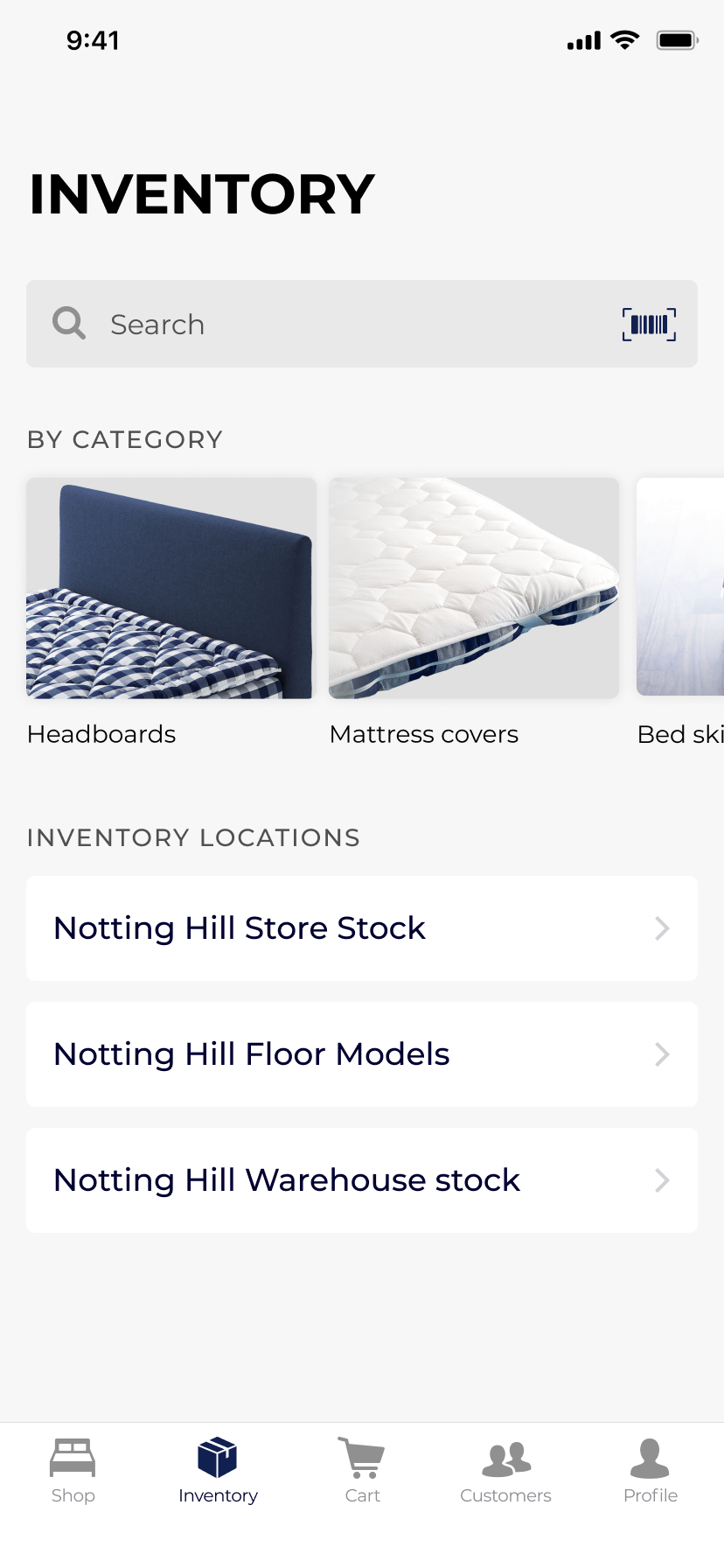
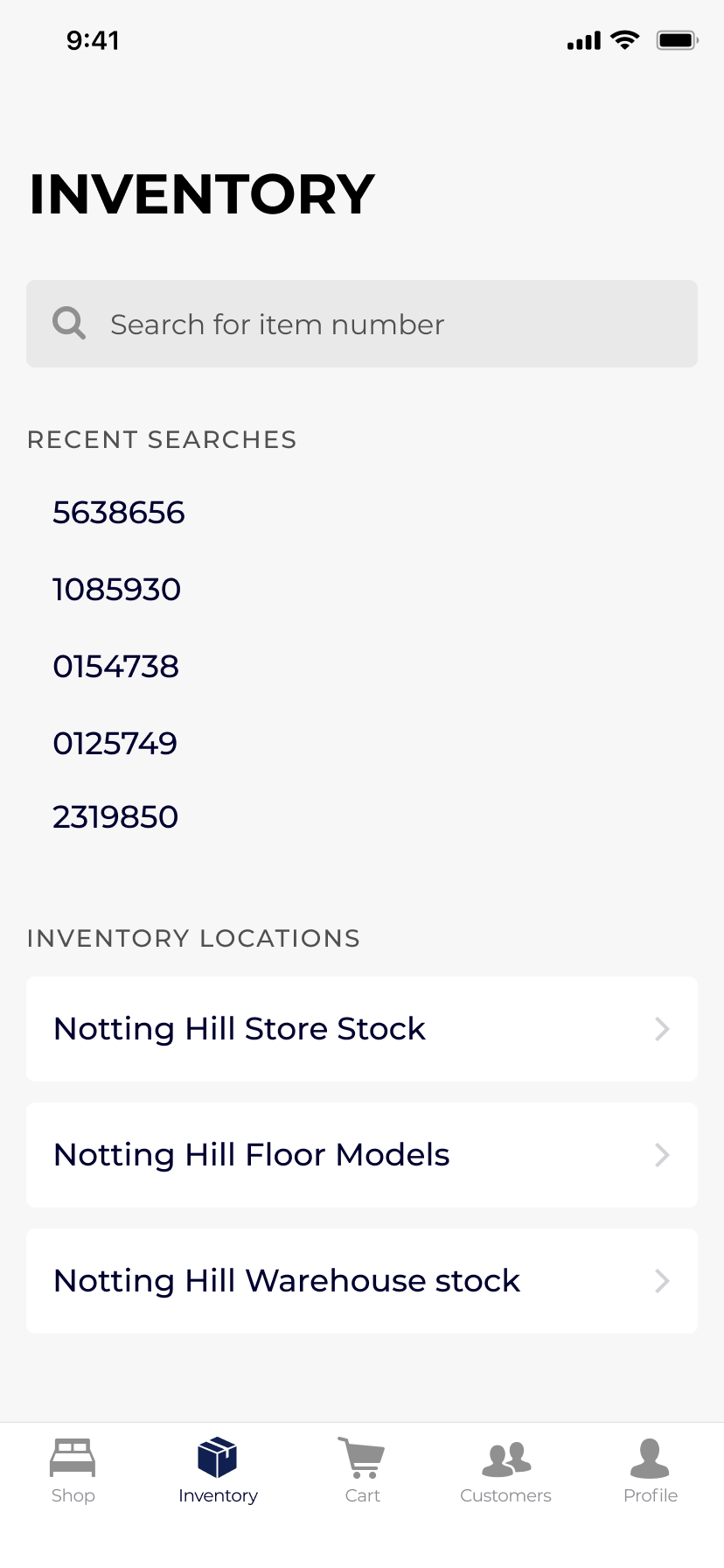
The “ideal” version (left) vs. what was shipped (right) in the end.
I first imagined being able to scan product bar codes to view stock levels, or perhaps browse by category. I quickly learnt these were not ideas we could fulfill in the short-term. The inventory data was not categorized by type and building barcode scanning was going to take too long for a feature the users wanted yesterday. After speaking to the store staff, I learnt they memorize popular product codes by heart and all they really wanted was a simple search field. For now, it would do.
time spent configuring a bed
20 min → 2 min
Outcome
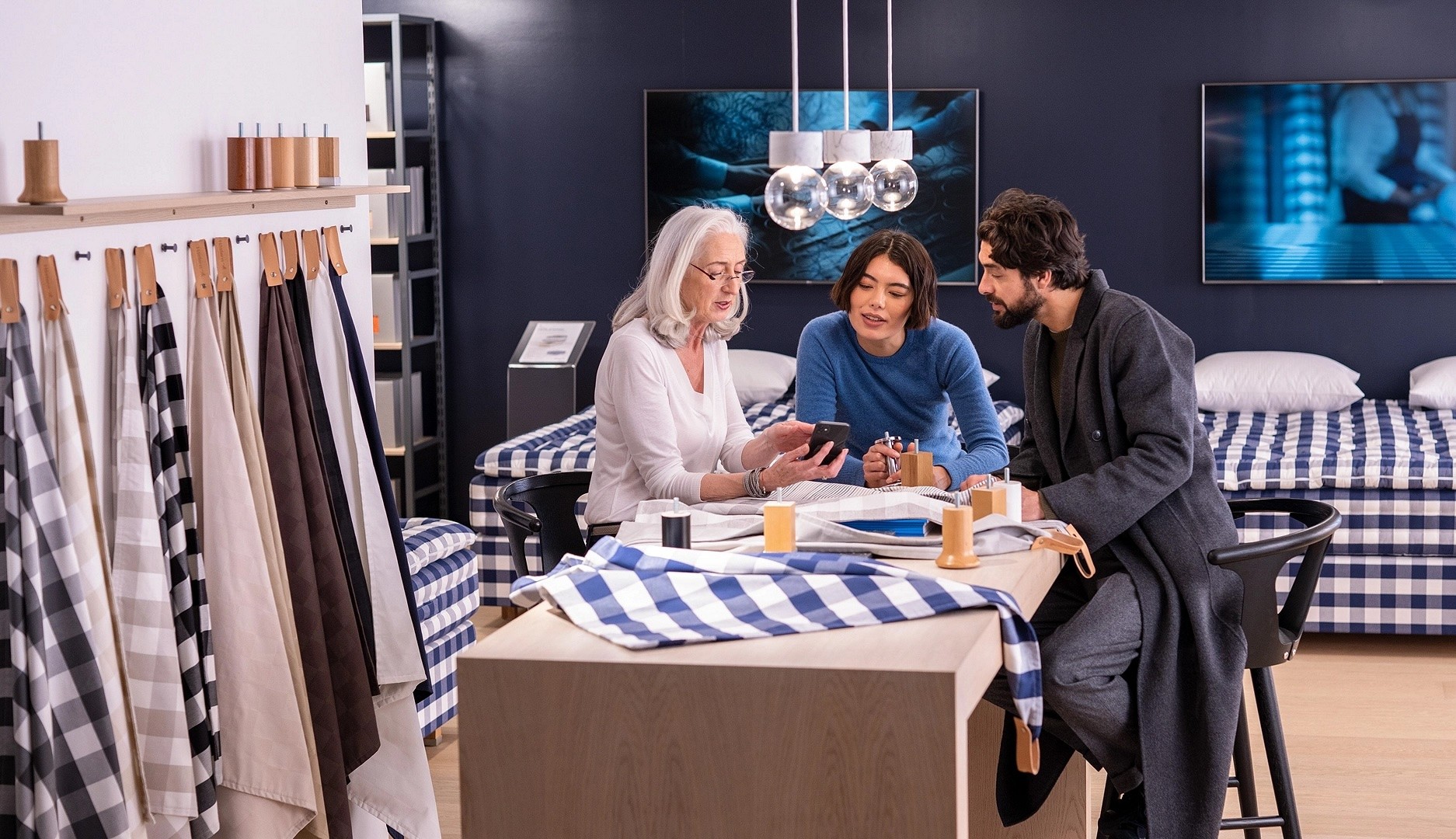
In the end, what had taken 20 min in the old system — and often required sales staff to ask their customer to go grab a coffee while they wait — now took less than a couple minutes in our app. Furthermore, it was now impossible to configure something that couldn’t be manufactured and we supported all the key functions the sales staff needed when making a sale. This was a huge success for Hästens.
Getting recognised
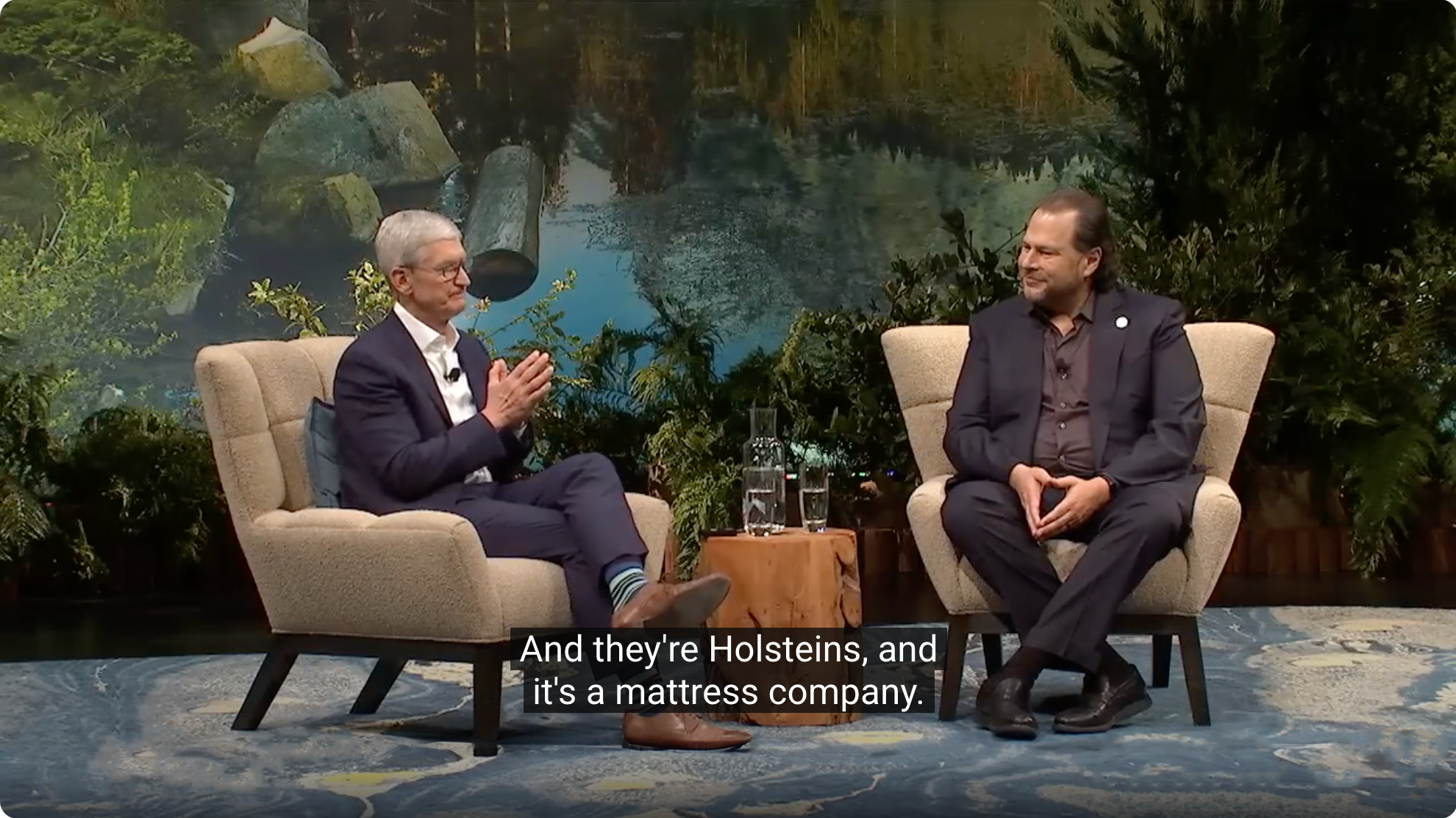
Our app was one of the first that utilized the Salesforce SDK for iOS – making it possible for us to fetch all the data from Salesforce and display it in the app. This got us some recognition, all the way from Apple’s CEO Tim Cook, who used the success of Hästens as an example at his fireside chat with Marc Benioff at the 2019 Salesforce Dreamforce conference in San Francisco.
Site content © 2025 Nina Westin


About

Contact

Hästens
Designing a digital sales tool to elevate the in-store experience
Background
This project came to us from Deloitte’s Salesforce team, who, when doing quick fixes on Hästens’ SalesCloud implementation had realized something bigger was at play that couldn’t be solved with a quick fix. This realization began a several years long partnership with Hästens, starting with setting their vision and then bit by bit realizing it: with the first stop being a custom sales app for their store staff.
Our task
Improving the way Hästens’ store staff configure beds and create quotes for the customers in store.
The client
Founded in 1852, Hästens is a Swedish manufacturer of high-end, handcrafted beds
my role
I was the UX/UI designer along with another UX designer, a Service Designer, an iOS developer, and two SalesForce developers
DELIVERABLES
Customer journeys
Design sprint
UX design
Visual design
App design
Getting to the root of the problem
Our user researcher started by conducting interviews with Hästens’ store staff, mapping processes and pain points, and I joined when it was time for synthesizing these insights.
We learned that most Hästens beds are created to order. These are high-end, luxury beds, which the customer can customize exactly to their liking. That also means that when it comes to the checkout, it’s not as easy as clicking “add to cart”. These beds need to be configured and a sales order sent to Hästens’ factory in Köping – and the current systems to do so were old, slow and far from user friendly. This jeopardized the key moment when sales staff were trying to make a sale.
problem 1
Configuring a bed could take up to 20 min in the current system.
problem 2
It was possible to configure a bed that couldn’t be manufactured.
Turning pain points into opportunities
Starting from the problem areas we’d found, we ideated on solutions for a future version of Hästens. This was visualized as an illustrated future-state customer journey, by myself and the UX-designer on the project, both in poster format for the Hästens’ office, and a microsite created in Readymag. This greatly facilitated our conversations with Hästens’ CEO and other stakeholders and was iterated upon to include the capabilities needed to turn it into reality. In the end, our customer journey became the foundation for Hästens future product roadmap.
The first product to come out of it? A point-of-sale app for the sales associates in store.
Part of the microsite version of the customer journey
The full future-state customer journey, showing both sides of the experience: the customer and employee.
Kickstarting the product build with a design sprint at Apple
Making use of Deloitte’s partnership with Apple, we applied to be part of their Enterprise Design Lab. This is Apple’s version of a one-week design sprint, specifically targeted to enterprise solutions.
Not long after, we set off to Cupertino, CA, together with the Hästens team. There, we co-created the first version of the app with sales associates from Hästens’ US stores. In just five days, we interviewed the sales associates, drew up whiteboard wireframes, iterated with the users, designed a hi-res mockup using Apple’s UI kit, iterated some more, and our iOS dev Frida built the first coded prototype of the app.
In the room of whiteboard walls at Apple’s offices in Cupertino: our UX:er Sara, and Felix, the designer from Apple, wireframing.
Back in Sweden, I polished that first iteration into an MVP to be used in stores. I worked side-by-side with our iOS dev on the build, and regularly tested my designs by going by the Hästens store on Birger Jarlsgatan and showing the prototypes to the sales associates – my future users.
Building out features
After the first version of the app was released to Hästens staff, we continued to work on additional features requested by the sales associates.
This app wasn’t just to buy beds, like a normal e-commerce app – it was meant to do all the back office tasks around selling in store. That included a long list of complicated flows, such as: visibility of inventory, packing items (i.e. reserving inventory), returning items, adding discounts, creating a sales order to the factory, multiple payment options...
One of the key features was stock visibility. Outside of Sweden especially, selling from stock was more common, being far away from the Köping factory. Visibility of inventory, both in store and warehouses, was crucial for sales associates to sell to customers who didn’t want to wait months for production and shipping.
The “ideal” version (left) vs. what was shipped (right) in the end.
I first imagined being able to scan product bar codes to view stock levels, or perhaps browse by category. I quickly learnt these were not ideas we could fulfill in the short-term. The inventory data was not categorized by type and building barcode scanning was going to take too long for a feature the users wanted yesterday. After speaking to the store staff, I learnt they memorize popular product codes by heart and all they really wanted was a simple search field. For now, it would do.
time spent configuring a bed
20 min → 2 min
Outcome
In the end, what had taken 20 min in the old system — and often required sales staff to ask their customer to go grab a coffee while they wait — now took less than a couple minutes in our app. Furthermore, it was now impossible to configure something that couldn’t be manufactured and we supported all the key functions the sales staff needed when making a sale. This was a huge success for Hästens.
Getting recognised
Our app was one of the first that utilized the Salesforce SDK for iOS – making it possible for us to fetch all the data from Salesforce and display it in the app. This got us some recognition, all the way from Apple’s CEO Tim Cook, who used the success of Hästens as an example at his fireside chat with Marc Benioff at the 2019 Salesforce Dreamforce conference in San Francisco.
Site content © 2025 Nina Westin


About
Contact
Hästens
Designing a digital sales tool to elevate the in-store experience
Background
This project came to us from Deloitte’s Salesforce team, who, when doing quick fixes on Hästens’ SalesCloud implementation had realized something bigger was at play that couldn’t be solved with a quick fix. This realization began a several years long partnership with Hästens, starting with setting their vision and then bit by bit realizing it: with the first stop being a custom sales app for their store staff.
Our task
Improving the way Hästens’ store staff configure beds and create quotes for the customers in store.
The client
Founded in 1852, Hästens is a Swedish manufacturer of high-end, handcrafted beds
my role
I was the UX/UI designer along with another UX designer, a Service Designer, an iOS developer, and two Salesforce developers
DELIVERABLES
Customer journeys
Design sprint
UX design
Visual design
App design
Getting to the root of the problem
Our user researcher started by conducting interviews with Hästens’ store staff, mapping processes and pain points, and I joined when it was time for synthesizing these insights.
We learned that most Hästens beds are created to order. These are high-end, luxury beds, which the customer can customize exactly to their liking. That also means that when it comes to the checkout, it’s not as easy as clicking “add to cart”. These beds need to be configured and a sales order sent to Hästens’ factory in Köping – and the current systems to do so were old, slow, and far from user friendly. This jeopardized the key moment when the sales staff were trying to make a sale.
problem 1
Configuring a bed could take up to 20 min in the current system.
problem 2
It was possible to configure a bed that couldn’t be manufactured.
Turning pain points into opportunities
Starting from the problem areas we’d found, we ideated on solutions for a future version of Hästens. This was visualized as an illustrated future-state customer journey, by myself and the UX-designer on the project, both in poster format for the Hästens’ office, and a microsite created in Readymag. This greatly facilitated our conversations with Hästens’ CEO and other stakeholders and was iterated upon to include the capabilities needed to turn it into reality. In the end, our customer journey became the foundation for Hästens future product roadmap.
The first product to come out of it? A point-of-sale app for the sales associates in store.
Part of the microsite version of the customer journey
The full future-state customer journey, showing both sides of the experience: the customer and employee.
Kickstarting the product build with a design sprint at Apple
Making use of Deloitte’s partnership with Apple, we applied to be part of their Enterprise Design Lab. This is Apple’s version of a one-week design sprint, specifically targeted to enterprise solutions.
Not long after, we set off to Cupertino, CA, together with the Hästens team. There, we co-created the first version of the app with sales associates from Hästens’ US stores. In just five days, we interviewed the sales associates, drew up whiteboard wireframes, iterated with the users, designed a hi-res mockup using Apple’s UI kit, iterated some more, and our iOS dev Frida built the first coded prototype of the app.
In the room of whiteboard walls at Apple’s offices in Cupertino: our UX:er Sara, and Felix, the designer from Apple, wireframing.
Back in Sweden, I polished that first iteration into an MVP to be used in stores. I worked side-by-side with our iOS dev on the build, and regularly tested my designs by going by the Hästens store on Birger Jarlsgatan and showing the prototypes to the sales associates – my future users.
Building out features
After the first version of the app was released to Hästens staff, we continued to work on additional features requested by the sales associates.
This app wasn’t just to buy beds, like a normal e-commerce app – it was meant to do all the back office tasks around selling in store. That included a long list of complicated flows, such as: visibility of inventory, packing items (i.e. reserving inventory), returning items, adding discounts, creating a sales order to the factory, multiple payment options...
One of the key features was stock visibility. Outside of Sweden especially, selling from stock was more common, being far away from the Köping factory. Visibility of inventory, both in store and warehouses, was crucial for sales associates to sell to customers who didn’t want to wait months for production and shipping.
The “ideal” version (left) vs. what was shipped (right) in the end.
I first imagined being able to scan product bar codes to view stock levels, or perhaps browse by category. I quickly learnt these were not ideas we could fulfill in the short-term. The inventory data was not categorized by type and building barcode scanning was going to take too long for a feature the users wanted yesterday. After speaking to the store staff, I learnt they memorize popular product codes by heart and all they really wanted was a simple search field. For now, it would do.
time spent configuring a bed
20 min → 2 min
Outcome
In the end, what had taken 20 min in the old system — and often required sales staff to ask their customer to go grab a coffee while they wait — now took less than a couple minutes in our app. Furthermore, it was now impossible to configure something that couldn’t be manufactured and we supported all the key functions the sales staff needed when making a sale. This was a huge success for Hästens.
Getting recognised
Our app was one of the first that utilized the Salesforce SDK for iOS – making it possible for us to fetch all the data from Salesforce and display it in the app. This got us some recognition, all the way from Apple’s CEO Tim Cook, who used the success of Hästens as an example at his fireside chat with Marc Benioff at the 2019 Salesforce Dreamforce conference in San Francisco.
Site content © 2025 Nina Westin
About
Contact