Raoul Wallenberg Institute
Visualising an AI-powered database to track war crimes
Background
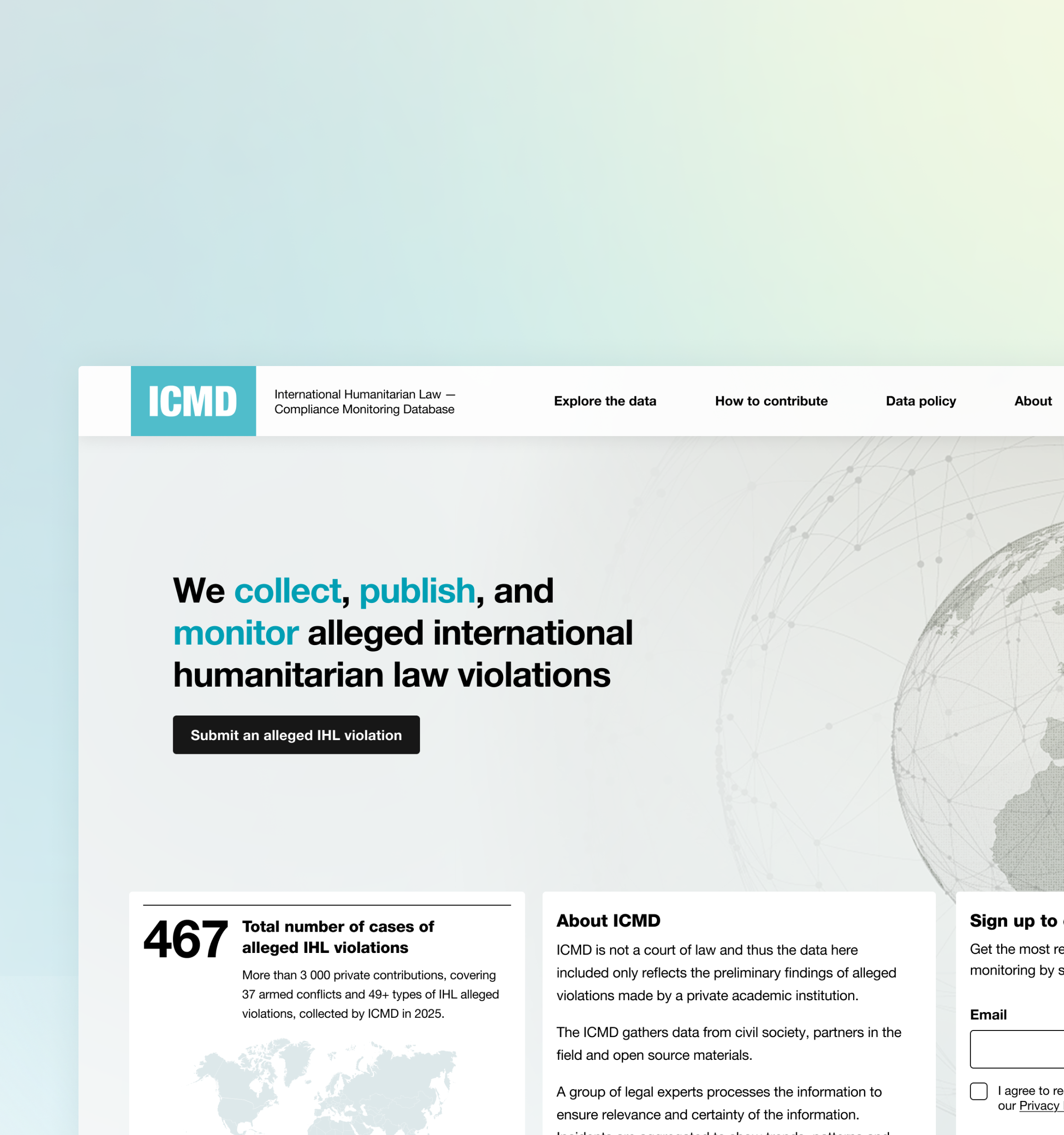
Raoul Wallenberg Institute (RWI) came to us with an idea – to use AI to create a database to track International Humanitarian Law violations (i.e. war crimes). While my colleagues were looking into the business case for the idea and the technical feasibility, me and another designer set out to create materials to visualize what the database could look like.
Our task
Provide RWI with materials to be able to pitch the idea of the IHL Compliance Monitoring Database when seeking funding.
The client
Raoul Wallenberg Institute of Human Rights and Humanitarian Law is an academic institution named after the Swedish diplomat who saved tens of thousands of Jews and other people at risk in Hungary at the end of World War II.
my role
I was the UX/UI Designer along with another designer
DELIVERABLES
Workshop facilitation
Concept design
UX design
Visual design
Presentation design
Co-creating the vision
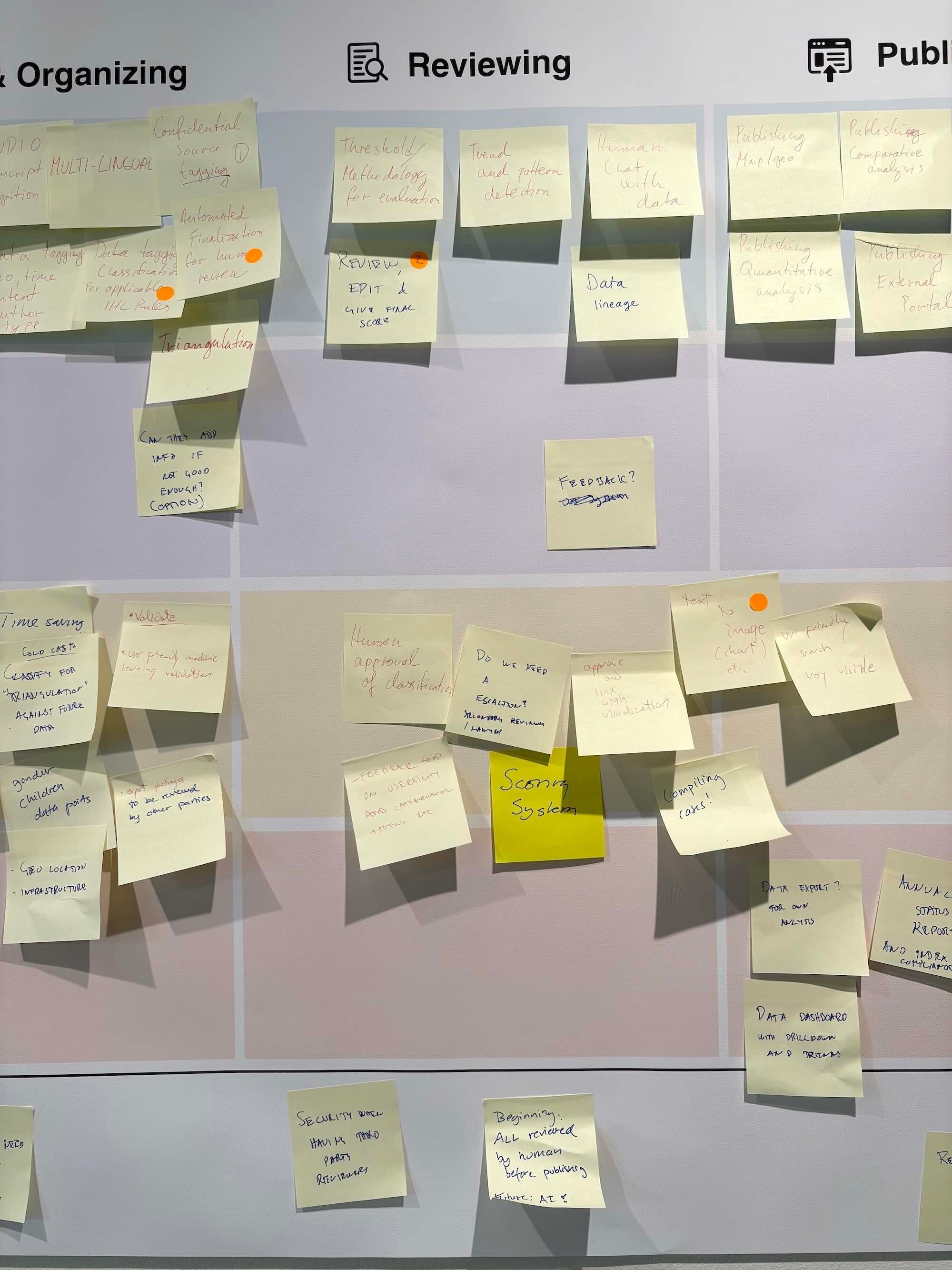
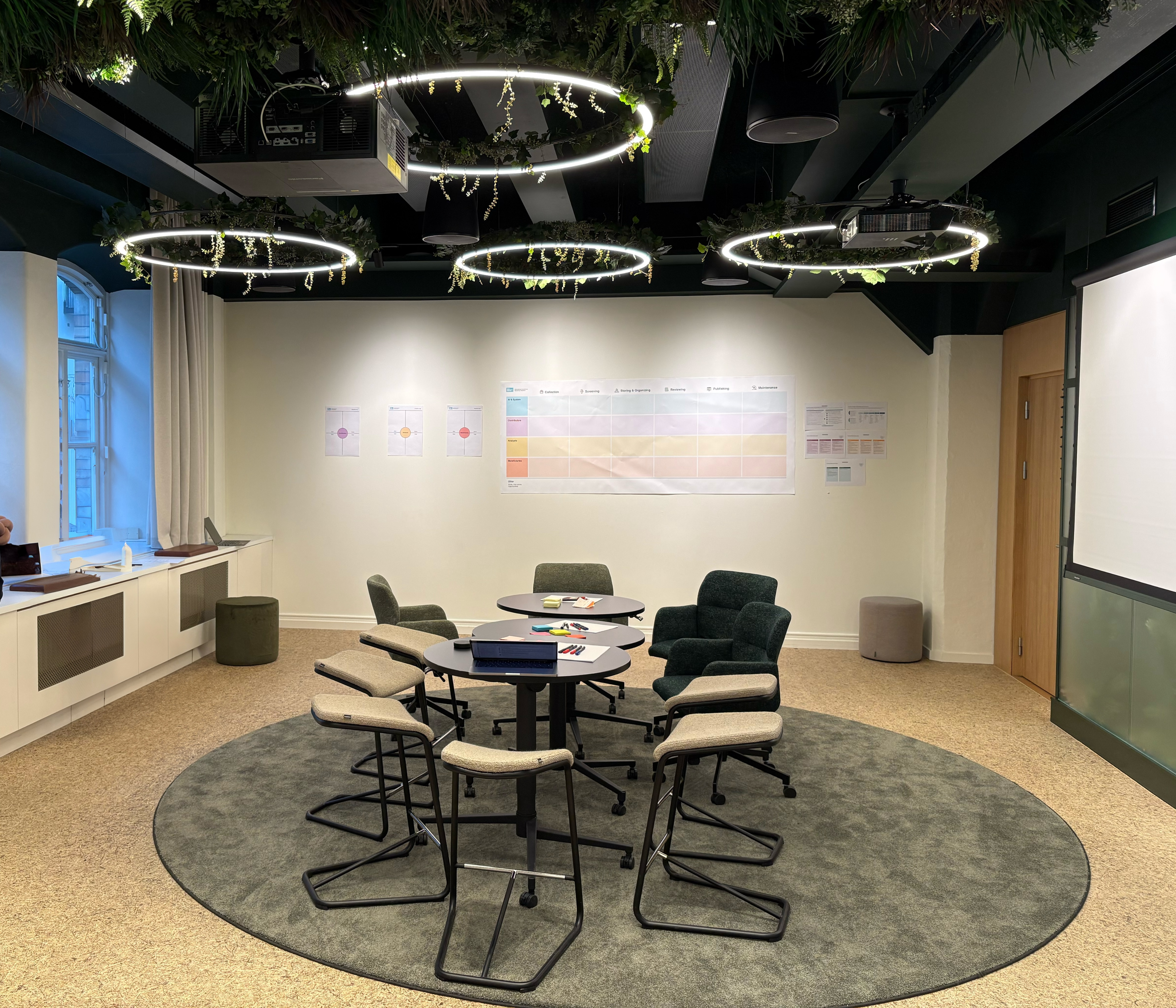
We started the design process with a workshop with stakeholders from RWI. We aligned on the key features of submitting, processing and displaying the data in the ICMD database, and discussed the needs of their different audiences. By the end of the workshop, we let the participants from RWI draw quick sketches of how they were imagining this concept.
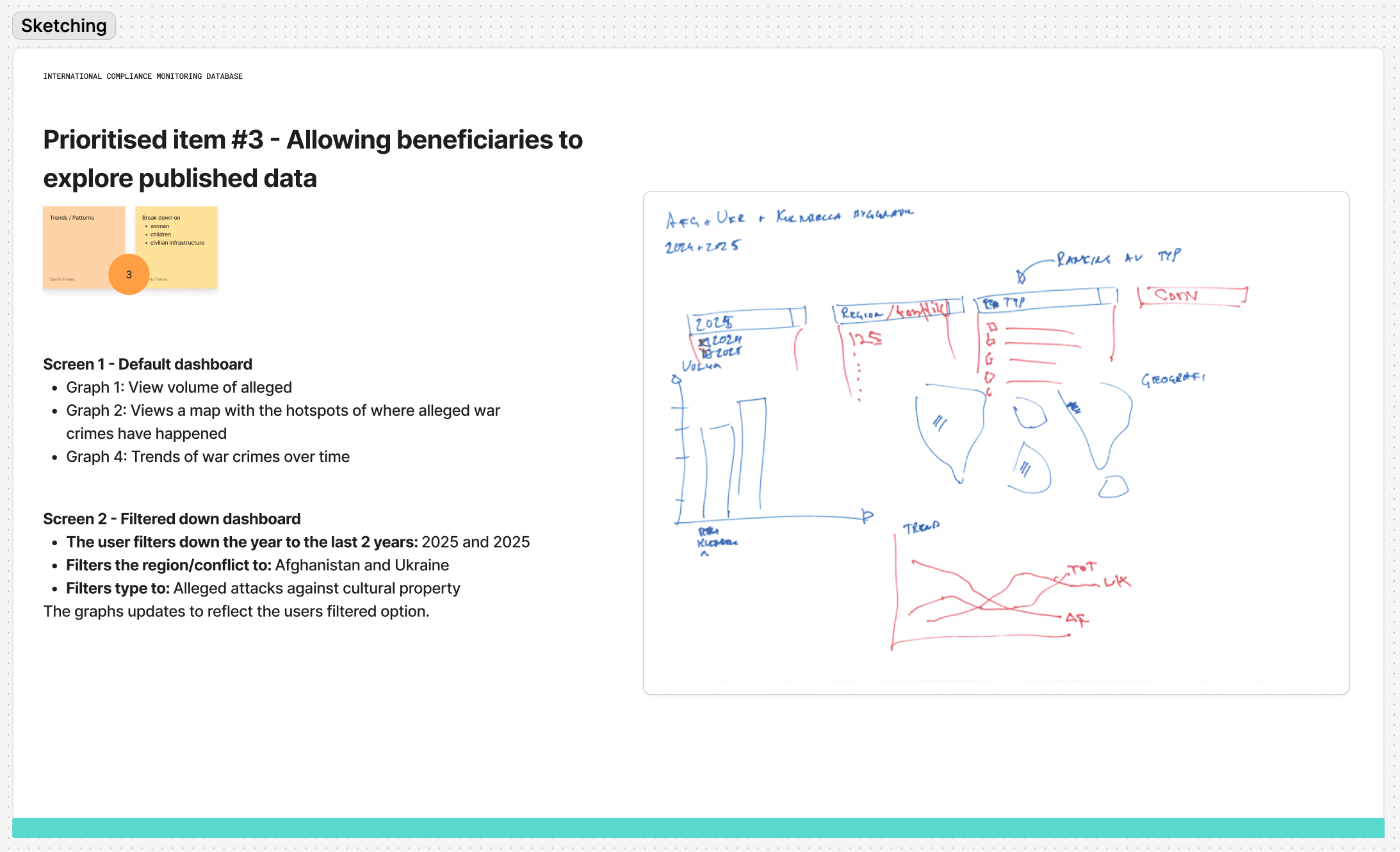
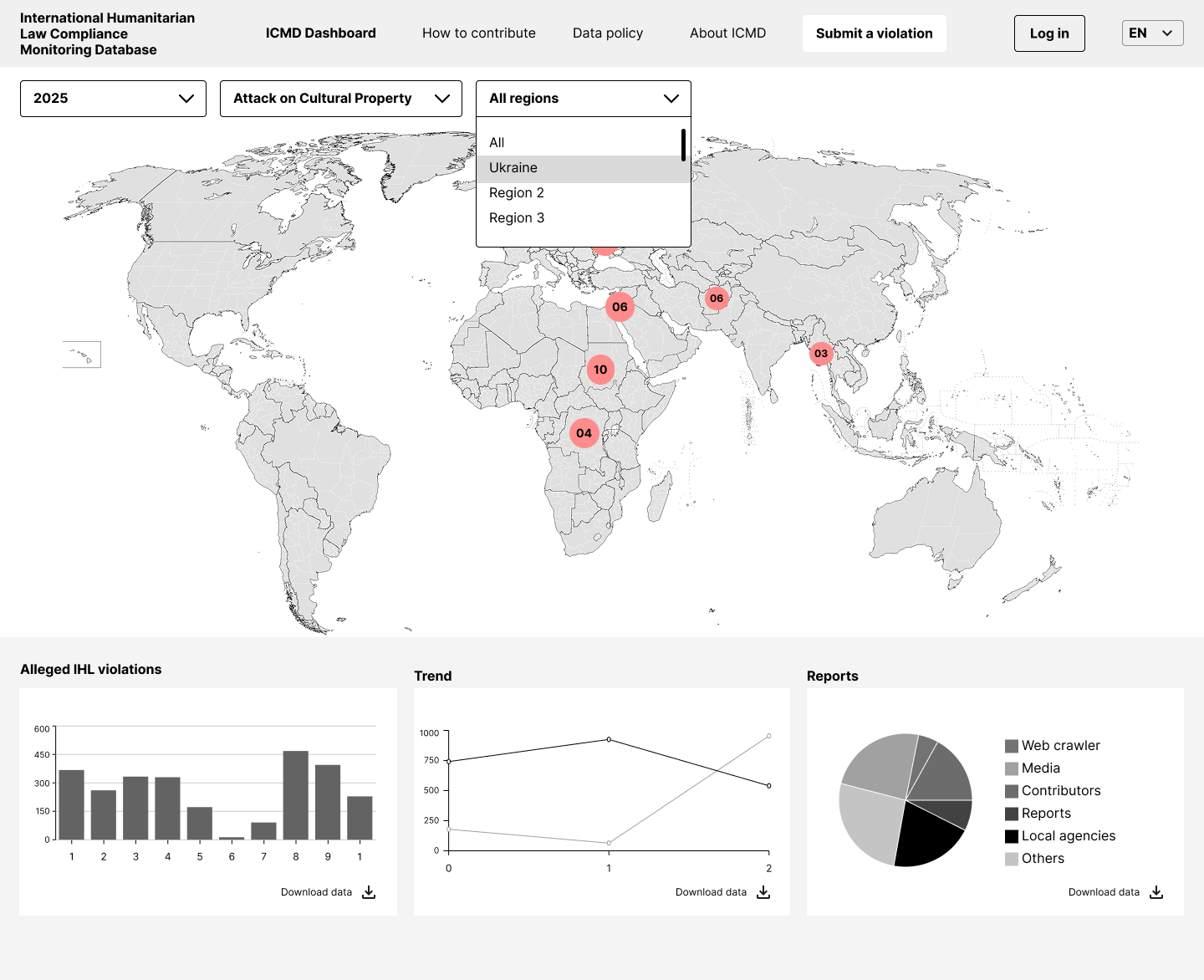
Quick sketches from the workshop by RWI memebers versus the wireframe it turned into.
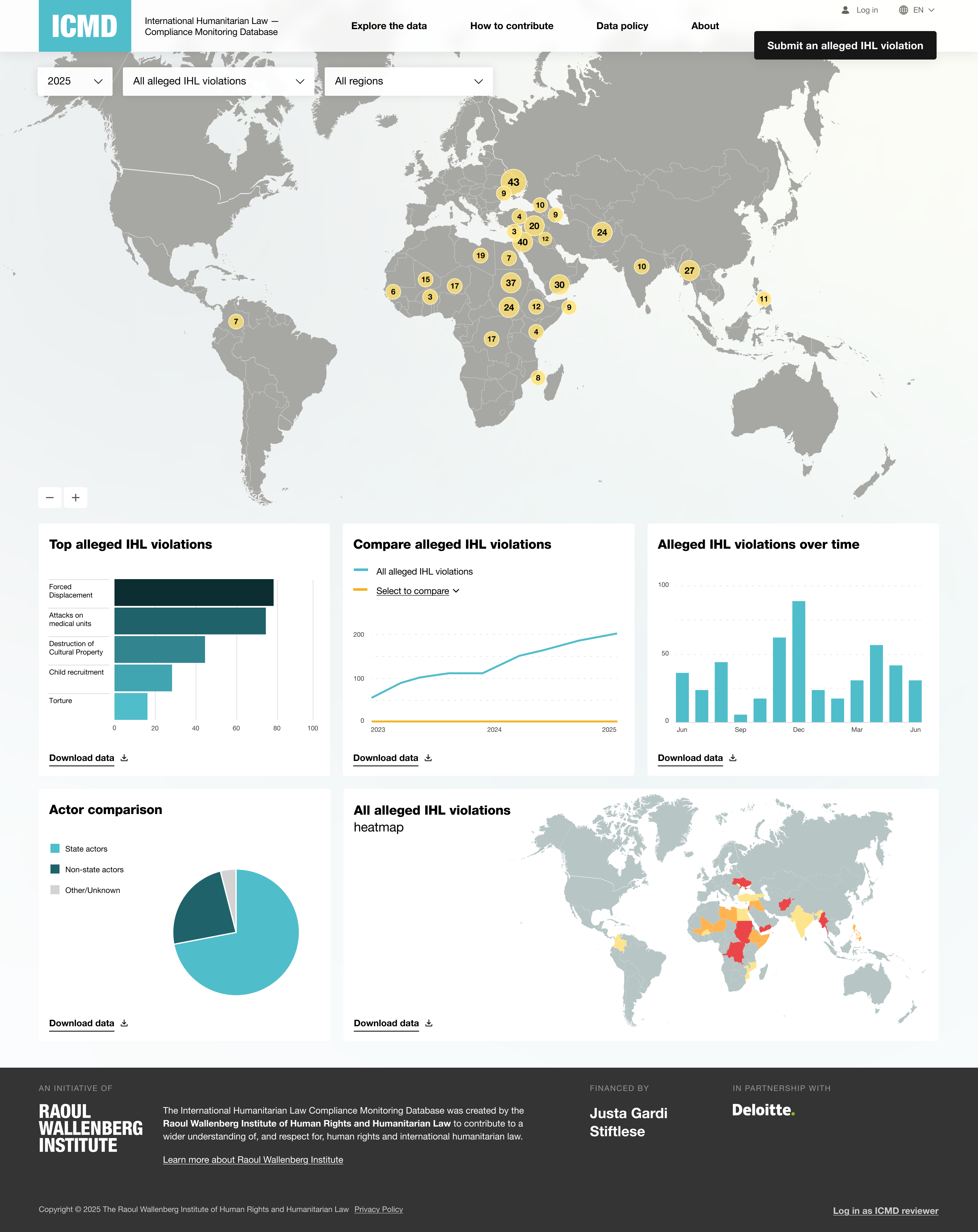
Finished concept design of the database dashboard
Prototyping the solution
From our designs, we created a simple prototype to bring the solution to life. I designed the public-facing web, while the other designer on the team designed the internal tool to be used by RWI to review the data submitted.
Crafting a narrative for pitching
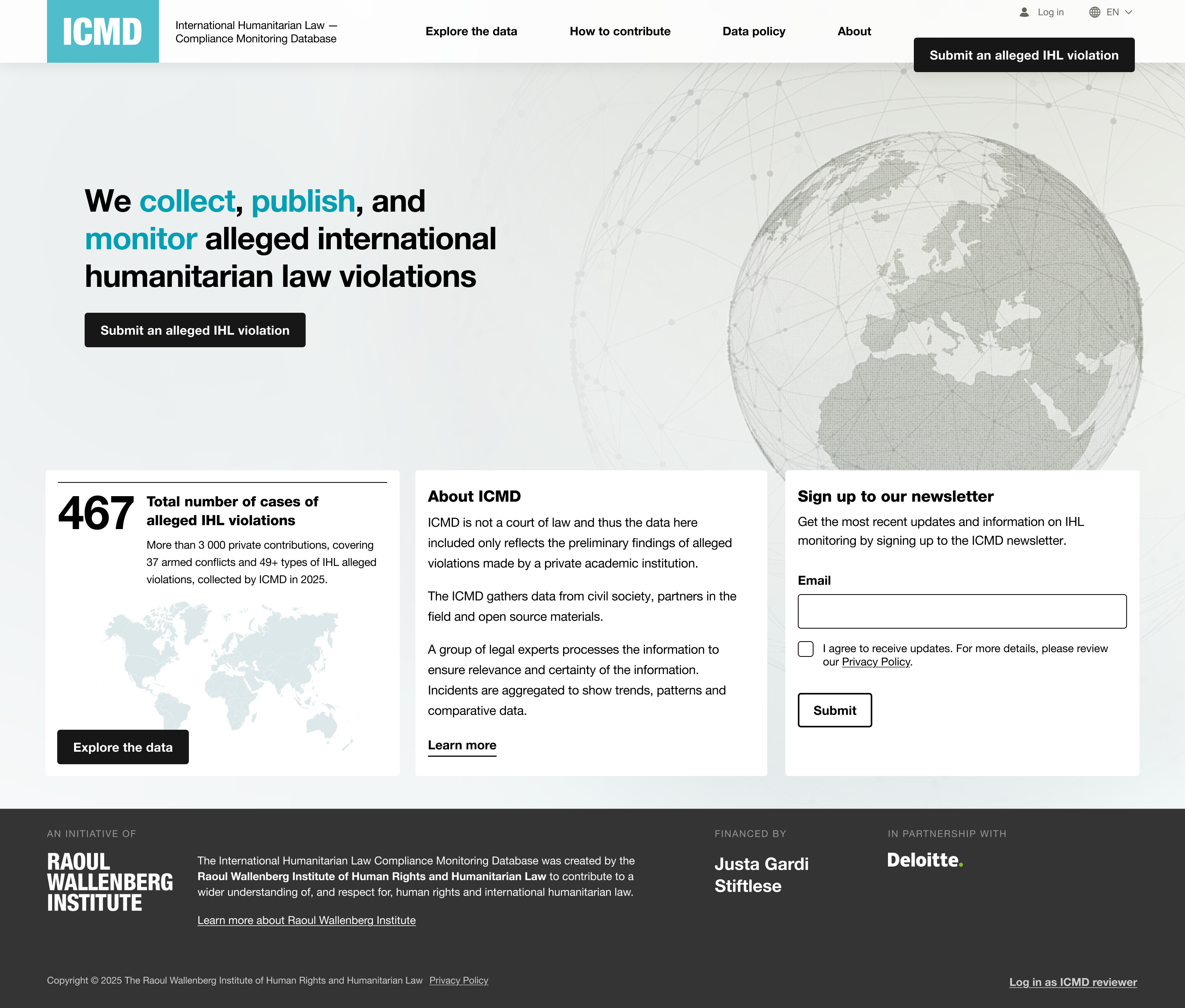
RWI had imagined the prototype alone would be enough to showcase their idea. We quickly realized that they had a lot to say that was outside of the digital interface. This led me and my designer colleague started crafting a presentation that told the story of how the database would be used and included videos of the prototype in this narrative.
Part of the pitch presentation for ICMD
We decided to build the presentation in PowerPoint (over anything more exciting) so that the team at RWI could edit the text and update the slides in the future. We stuck to system fonts and made use of PowerPoint’s (not always smooth...) animations as best we could. We worked with RWI on the pacing so that they could trigger all the animations and transitions as expected.
Funding: secured
The presentation we designed was put to the test when RWI introduced their initiative to a selected group of ambassadors at an event in Stockholm. They continued to pitch, and has now gotten sponsored by a major tech partner to conduct a technical pre-study.


About

Contact

Site content © 2025 Nina Westin

Raoul Wallenberg Institute
Visualizing an AI-powered database to track war crimes
Background
Raoul Wallenberg Institute (RWI) came to us with an idea – to use AI to create a database to track International Humanitarian Law violations (i.e. war crimes). While my colleagues were looking into the business case for the idea and the technical feasibility, me and another designer set out to create materials to visualize what the database could look like.
Our task
Provide RWI with materials to be able to pitch the idea of the IHL Compliance Monitoring Database when seeking funding.
The client
Raoul Wallenberg Institute of Human Rights and Humanitarian Law is an academic institution named after the Swedish diplomat who saved tens of thousands of Jews and other people at risk in Hungary at the end of World War II.
my role
I was the UX/UI Designer collaborating with another designer
DELIVERABLES
Workshop facilitation
Concept design
UX design
Visual design
Presentation design
Co-creating the vision
We started the design process with a workshop with stakeholders from RWI. We aligned on the key features of submitting, processing and displaying the data in the ICMD database, and discussed the needs of their different audiences. By the end of the workshop, we let the participants from RWI draw quick sketches of how they were imagining this concept.
Quick sketches from the workshop by RWI members versus the wireframe it turned into.
Finished concept design of the database dashboard
Prototyping the solution
From our designs, we created a simple prototype to bring the solution to life. I designed the public-facing web, while the other designer on the team designed the internal tool to be used by RWI to review the data submitted.
Crafting a narrative for pitching
RWI had imagined the prototype alone would be enough to showcase their idea. We quickly realized that they had a lot to say that was outside of the digital interface. This led me and my designer colleague started crafting a presentation that told the story of how the database would be used and included videos of the prototype in this narrative.
Part of the pitch presentation for ICMD
We decided to build the presentation in PowerPoint (over anything more exciting) so that the team at RWI could edit the text and update the slides in the future. We stuck to system fonts and made use of PowerPoint’s (not always smooth...) animations as best we could. We worked with RWI on the pacing so that they could trigger all the animations and transitions as expected.
Funding: secured
The presentation we designed was put to the test when RWI introduced their initiative to a selected group of ambassadors at an event in Stockholm. They continued to pitch, and has now gotten sponsored by a major tech partner to conduct a technical pre-study.
Site content © 2025 Nina Westin


About
Contact

Raoul Wallenberg Institute
Visualizing an AI-powered database to track war crimes
Background
Raoul Wallenberg Institute (RWI) came to us with an idea – to use AI to create a database to track International Humanitarian Law violations (i.e. war crimes). While my colleagues were looking into the business case for the idea and the technical feasibility, me and another designer set out to create materials to visualize what the database could look like.
Our task
Provide RWI with materials to be able to pitch the idea of the IHL Compliance Monitoring Database when seeking funding.
The client
Raoul Wallenberg Institute of Human Rights and Humanitarian Law is an academic institution named after the Swedish diplomat who saved tens of thousands of Jews and other people at risk in Hungary at the end of World War II.
my role
I was the UX/UI Designer along with another designer
DELIVERABLES
Workshop facilitation
Concept design
UX design
Visual design
Presentation design
Co-creating the vision
We started the design process with a workshop with stakeholders from RWI. We aligned on the key features of submitting, processing and displaying the data in the ICMD database, and discussed the needs of their different audiences. By the end of the workshop, we let the participants from RWI draw quick sketches of how they were imagining this concept.
Quick sketches from the workshop by RWI members versus the wireframe it turned into.
Finished concept design of the database dashboard
Prototyping the solution
From our designs, we created a simple prototype to bring the solution to life. I designed the public-facing web, while the other designer on the team designed the internal tool to be used by RWI to review the data submitted.
Crafting a narrative for pitching
RWI had imagined the prototype alone would be enough to showcase their idea. We quickly realized that they had a lot to say that was outside of the digital interface. This led me and my designer colleague started crafting a presentation that told the story of how the database would be used and included videos of the prototype in this narrative.
Part of the pitch presentation for ICMD
We decided to build the presentation in PowerPoint (over anything more exciting) so that the team at RWI could edit the text and update the slides in the future. We stuck to system fonts and made use of PowerPoint’s (not always smooth...) animations as best we could. We worked with RWI on the pacing so that they could trigger all the animations and transitions as expected.
Funding: secured
The presentation we designed was put to the test when RWI introduced their initiative to a selected group of ambassadors at an event in Stockholm. They continued to pitch, and has now gotten sponsored by a major tech partner to conduct a technical pre-study.
Site content © 2025 Nina Westin
About
Contact